
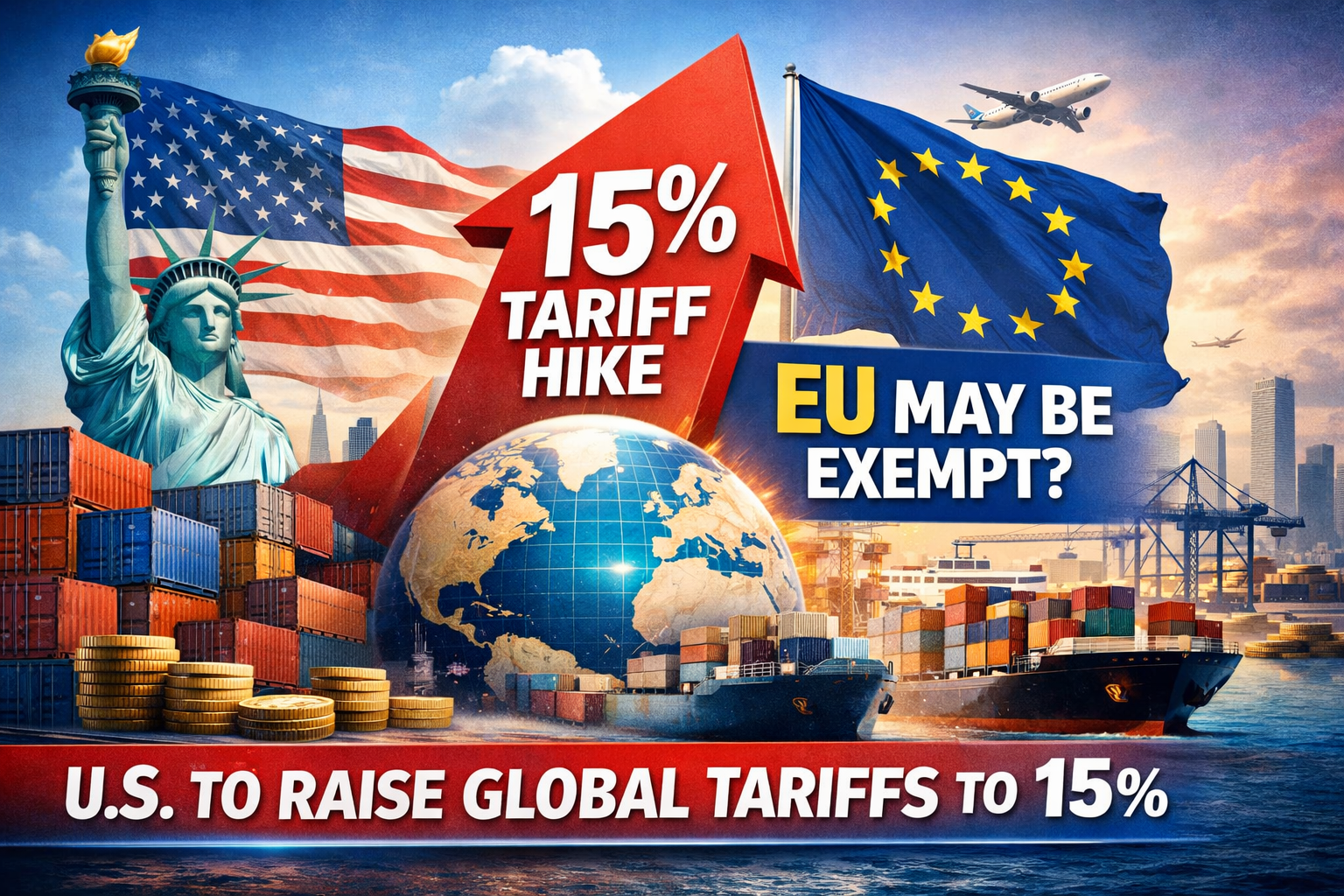
US Plans Global Tariff Increase to 15%
The United States government is preparing to increase universal tariffs to 15% on global imports, a move that could significantly impact international trade. According to reports from agencies, US Treasury Secretary Scott Bessent stated that the new tariff structure may take effect this week.
However, the European Union (EU) may receive a special exemption from this tariff increase, potentially maintaining smoother trade relations between the US and Europe.
This development has sparked discussions among global markets, businesses, and investors about the future of international trade policies.
Why the US Is Raising Global Tariffs
The proposed tariff increase is part of a broader effort by the US government to:
- Protect domestic manufacturing industries
- Reduce trade deficits
- Encourage companies to produce goods locally
- Strengthen national economic security
Tariffs act as taxes on imported goods, making foreign products more expensive and giving domestic producers a competitive advantage.
EU May Be Exempt from the Tariff Hike
One of the most significant aspects of this announcement is the potential exemption for the European Union.
The EU is a key trading partner of the United States, and exempting European goods from higher tariffs could:
- Prevent trade tensions between allies
- Maintain stable supply chains
- Protect existing trade agreements
If confirmed, this exemption could provide European exporters a competitive advantage compared to other global suppliers.
Old Tariff Rates Could Return in Five Months
According to Scott Bessent, the new tariff policy may not be permanent.
He indicated that older tariff rates could return within five months, depending on the outcomes of trade negotiations and economic conditions.
This suggests the tariff increase may be a temporary economic strategy rather than a long-term structural change.
Global Market Impact
The proposed tariff increase could affect several sectors worldwide:
Manufacturing
Higher tariffs may push companies to relocate manufacturing operations to the United States.
Automotive Industry
Car manufacturers exporting to the US could face increased costs.
Technology and Electronics
Electronics imports may become more expensive, impacting supply chains.
Global Trade Relations
Countries affected by the tariffs may consider counter-tariffs or trade negotiations.
What This Means for Investors
For investors and businesses, tariff changes often influence:
- Stock market volatility
- Commodity prices
- Import and export volumes
- Supply chain decisions
Companies heavily dependent on international trade may experience short-term uncertainty, while domestic producers could benefit from reduced foreign competition.
Conclusion
The US plan to raise global tariffs to 15% marks an important development in international trade policy. While the European Union may receive exemptions, other trading partners could face higher costs when exporting goods to the United States.
With the possibility that old tariff rates may return within five months, businesses and investors will be closely watching how the situation evolves.